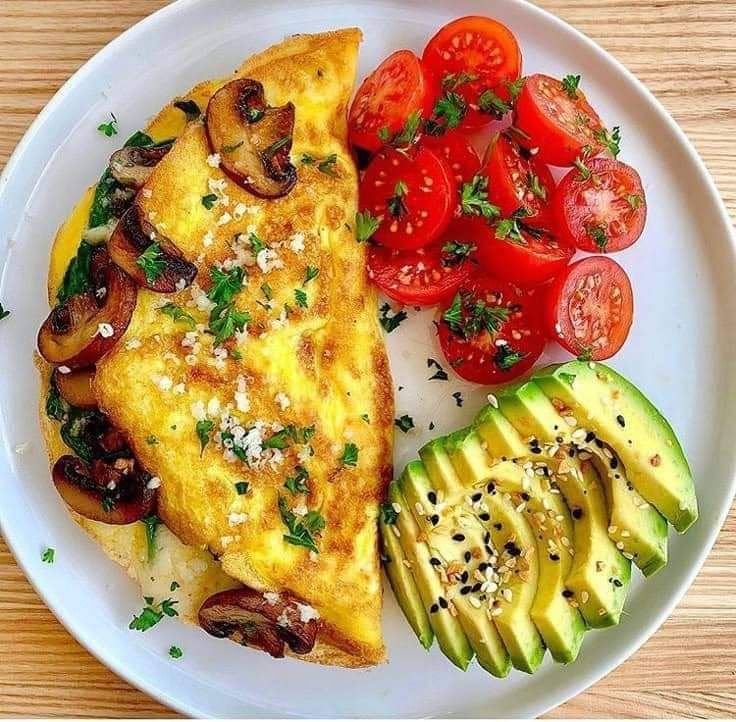
| Prep Time | 5 minutes |
| Cook Time | 10 minutes |
| Total Time | 15 minutes |
| Skill Level / Intensity | Easy / Beginner-Friendly |
| Heat / Cooking Intensity | Medium to Low Heat ($250^\circ\text{F}$ – $300^\circ\text{F}$ / $120^\circ\text{C}$ – $150^\circ\text{C}$) |
| Yield | 1 large serving (or 2 light portions) |
Ingredients You’ll Need
For the Veggie Filling
-
Grass-Fed Butter or Avocado Oil: 1 tablespoon (for sautéing vegetables).
-
Cremini or Button Mushrooms: 1/2 cup, sliced. Mushrooms provide a hearty, earthy texture without adding excess carbs.
-
Baby Spinach: 1 cup, fresh and lightly packed. Shrinks down quickly while delivering essential magnesium and folate.
-
Bell Pepper (Green or Red): 2 tablespoons, finely diced. Adds crunch, vibrant color, and a hit of Vitamin C.
-
Garlic: 1 small clove, minced (or 1/4 teaspoon garlic powder).
For the Omelet Base
-
Large Eggs: 3 whole eggs (preferably pasture-raised for rich, bright yellow yolks).
-
Heavy Whipping Cream or Unsweetened Almond Milk: 1 tablespoon. Adding a splash of heavy cream builds micro-air bubbles, giving you an ultra-fluffy texture.
-
Salt & Black Pepper: 1/4 teaspoon kosher salt and a pinch of freshly cracked black pepper.
-
Grass-Fed Butter: 1 tablespoon (for cooking the eggs).
For the Cheese & Toppings
-
Sharp Cheddar or Gruyère Cheese: 1/3 cup, freshly shredded. Avoid pre-shredded bag cheeses, which often contain potato starch coatings that add hidden carbs.
-
Fresh Hass Avocado: 1/2 avocado, sliced (for serving).
-
Fresh Chives or Green Onions: 1 tablespoon, finely chopped.
Step-by-Step Cooking Guide
Pro Tips for the Best Keto Omelet
-
Don’t Overcook the Eggs: High heat makes eggs tough and rubbery. Cooking low and slow preserves the delicate protein structures, keeping your omelet tender and velvety.
-
Pre-Cook Vegetable Water Out: Vegetables like mushrooms and spinach release moisture when heated. Sautéing them separately prevents that liquid from bleeding into your omelet and making it soggy.
-
Use Room-Temperature Eggs: Cold eggs directly from the fridge cool down your pan rapidly and cook unevenly. Pull your eggs out 10–15 minutes before cooking for the softest fold.
Storage, Reheating & Meal Prep
-
Refrigeration: While omelets are best enjoyed fresh off the stove, leftovers can be stored in an airtight container in the refrigerator for up to 2 days.
-
Reheating: Reheat gently in a non-stick pan over low heat with a touch of butter for 2–3 minutes, or microwave on 50% power for 45–60 seconds to avoid turning the eggs rubbery.
-
Meal Prep Tip: You can sauté large batches of the vegetable filling in advance and store them in the fridge. When you’re ready for breakfast, simply whisk your eggs and build your omelet in under 5 minutes!
Detailed Nutritional Breakdown
Calculated for 1 complete serving (including 1/2 sliced avocado topping).
| Nutrient | Amount Per Serving | % Daily Value* |
| Calories | 560 kcal | — |
| Total Fat | 48 g | 62% |
| Saturated Fat | 22 g | 110% |
| Trans Fat | 0.5 g | — |
| Cholesterol | 590 mg | 197% |
| Sodium | 680 mg | 30% |
| Total Carbohydrate | 7 g | 3% |
| Dietary Fiber | 4 g | 14% |
| Net Carbohydrates | 3 g | — |
| Total Sugars | 2 g | — |
| Protein | 26 g | 52% |
| Vitamin D | 3.2 mcg | 16% |
| Calcium | 340 mg | 26% |
| Iron | 3.8 mg | 21% |
| Potassium | 610 mg | 13% |